Tuesday, November 18, 2014

Guidance on New Science Standards


California Department of Education: News Release


SACRAMENTO—State Superintendent of Public Instruction Tom Torlakson said the state is one step closer to implementing the California Next Generation Science Standards(CA NGSS) as the State Board of Education today adopted a new plan.
            “This plan lays out what the state, districts, and the community can do to ensure that the exciting new science standards are implemented smoothly,” said Torlakson. “These standards will provide all students with a deeper understanding of science so they are better prepared for college and careers, including jobs in the high-technology fields,” said Torlakson.
            The NGSS Systems Implementation Plan for California offers school districts and the community strategies on how to provide educators training and resources to teach the new standards. The plan helps districts align local testing to improve teaching and learning. There are also tips on improving communication; how to get everyone to work together; and using the new standards in before and after school programs.
            The CA NGSS moves away from teaching science by rote memorization in a single subject matter, and now teaches students how to use analytical skills learned in several subject matters to understand the world around them. For example, CA NGSS integrates engineering and technology practices to help students understand science and the natural world. The CA NGSS also connects students with the Common Core State Standards, which teach them 21st century skills needed for college and careers.           
            Science, technology, engineering, and mathematics (STEM)-related industries are major drivers of California's economy. A 2011 U.S. Department of Commerce study found that over the last decade, growth in STEM jobs grew three times faster than other occupations, and will continue to outpace non-STEM jobs in the next decade.                 
            California was a lead partner in a national movement to develop the NGSS. The State Board of Education adopted them in 2013 to better prepare students for college and careers in STEM fields. The CA NGSS replaces the old science standards last adopted in 1998.

Now on to all of the great hands-on project based STEM learning activities that the expanded learning program practitioners are engaging students in around Region 3.


Name of Out-of-School-Time ProviderSacramento Chinese Community 
                                                                    Service Center


Grade Level of Activity: 5th Grade

Number of students who took part in the activity: 20

Type of Activity: S.T.E.M. - Building Your Own Marshmallow Catapult

Learning Outcomes- Students were able to: 

  • Describe how force affects the motion of a projectile
  • Discuss the uses of catapults in industry and connections to engineering
  • Explain and compare the meanings of accuracy and precision
  • Explain the optimum angle (45 degrees) for launching a projectile the farthest distance
  • Explain and demonstrate higher-level thinking of how to construct a catapult with different materials
  • Collaborate with a partner to solve problems, design, build, and test the mechanism

SCCSC Expanded Learning Program Staff checking for understanding.
SCCSC Expanded Learning Program student showing off their catapult.


Another SCCSC Expanded Learning Program student proudly showing off his catapult.

For more information on this S.T.E.M. activity please contact Kae Saeteurn at kae@sccsc.org


Name of Out-of-School-Time Provider
Sacramento Chinese Community 
                                                                    Service Center


Grade Level of Activity: K-8th

Number of students who took part in the activity: 113

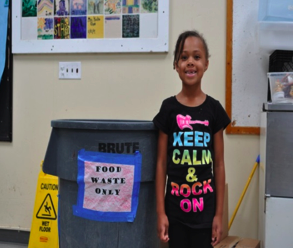
Type of Activity: School to Fuel Program: The School to Fuel Program of Breathe California of Sacramento (BREATHE) aims to improve our local air quality by working with schools to collect cafeteria food waste and transport that waste to a local biodigester for conversion into clean fuel and electricity.  The afterschool program staff, headed by Monik Vega, piloted School to Fuel with amazing success. School to Fuel now seeks to roll-out site-wide to collect more food waste, but student and staff participation is key for continued success!


Learning Outcomes- Students were able to: 

  • Learn how to separate food waste and trash
  • Learn how to dump the food waste in the dumpster
  • Learn how to explain this program to other students
  • Learn about how the School to Fuel Program is helping to save our environment
SCCSC students taking part in a BREATHE activity.

An SCCSC student taking part in a BREATHE activity.


SCCSC displaying their messy gloves during a BREATHE activity.


Name of Out-of-School-Time ProviderSacramento Chinese Community 
                                                                    Service Center


School Site: Nicholas Elementary

Grade Level of Activity: 3rd

Number of students who took part in the activity: 18

Type of Activity: Foil Boats


Learning Outcomes- Students were able to: 

  • Design a boat using a 12" x 12" piece of aluminum foil to understand buoyancy of objects 
  • Use teamwork to come up with one design that will hold the most mass
  • Test different designs before deciding on final design and starting their model
  • Predict how many crayons their boat would hold
  • Hypothesize why their boat sank and how they could build a better model next time
  • Deepen their understanding of the scientific method and the engineering and design process

A group of SCCSC students testing their foil boat.
Another group of SCCSC students testing the design of their foil boat.


The winning foil boat vs mass design.


For any information in regards to this activity, please contact Rian Carroll at rain@sccsc.org.


Name of Out-of-School-Time Provider: Boys and Girls Club of El Dorado County 
                                                                     Western Slope

Grade Level of Activity: 3rd through 5th

Number of students who took part in the activity: 20


Learning Outcomes- Students were able to: 

a) Learn that scientist investigate by making observations and performing tests


b) Deepen their understanding of air resistance


c) Explore and understand that skinny streamlined shapes can move                                      
     faster because they have less air resistance


d) Understand that air resistance is an important factor in designing rockets                                
     fast takeoffs and soft landings


BGC students trying to slow down the pull of gravity.


BGC students deepening their understanding of air resistance.


BGC testing their rocket and parachute design.

For more information on this activity please contact Shandra Raymond at shandra@bgce.org.


Name of Out-of-School-Time ProviderBoys and Girls Club of El Dorado County 
   Western Slope

Grade Level of Activity: 6rd through 8th

Number of students who took part in the activity: 20

Type of ActivityEngineering Everywhere


Learning Outcomes- Students were able to: 

a) MS-ETS1-1 Define the criteria and constraints of a design problem


b) MS-ETS1-2 Evaluate competing design solutions


c) MS-ETS1-4 Develop a model to generate data


A BGC student testing her design theory.
For more information on this activity please contact Shandra Raymond at shandra@bgce.org.


STEM and Other Pertinent Articles:

1) How Cross-Sector Collaborations are Advancing STEM Learning (Noyce)

2) Why We Need to Value Student's Spatial Creativity (KQED)

3) The Value of Connecting the Dots to Create Real Learning (KQED)

4) Comprehensive Plan to Strengthen Future Computer Science Workforce (CSL Network)

5) Five Great Teachers on What Makes a Great Teacher (NPR) 

6) America After 3 PM: How are kids spending their time after school?
    (After School Alliance Report)

7) STEM and Writing: A Super Combination (Edutopia)

8) 8 Strategies for Teaching Academic Language (Edutopia)

9) FUSE: Next Generation Brief Provides Strategies for Integrating NGSS (TASC)

10) Policy Brief: Next Generation Science Standards: Considerations for Curricula, 
      Assessments, Preparation, and Implementation (MCREL)

11) New Study Offers First Look at LCFF in CA School Districts (Ed Brief)


STEM (and other Integrated Core Content) 
Activities/Videos/Websites/Podcast:

1) When Women Stopped Coding (NPR Podcast)

2) George Washington Carver: Renaissance Man (Science Friday Podcast)

3) Smart Milk Jug Invented by Sixth Graders (Science Friday Podcast)

4) Letter to a Young Scientist (Science Friday Podcast)

5) Zip Line Zoo (Activity: Grades 3-5)

6) Goodnight Moon, Goodnight Math (Science Friday Podcast)

7) One for All: A Natural Resources Game (Activity: Grades 6-12)

8) No Waffling on on the Numbers (Activity Grades: All Ages)

9) Fashion Circuit (Activity Grades: 5-12)

10) One Problem, Many Approaches (Teaching Chanel: Video)

11) After School and Next Generation Science Standards: Where to Start?
      (After School Alliance: Webinar)

12) Engineering Adventures: Bubble Bonanza (Grades 3-5)

13) Land Based Learning (Professional Development / Resources)

14) 3D Space Gallery (NASA Resources)

15) Code Curriculum (Free at Code.org)


STEM Grants:

1) Project WET: Grant Database (Over 20 different grants available)


     Grants are made for activities that promote and support high-quality educational 
     programs, enable children and youth to understand and appreciate our world through
     learning experiences and engage them in active, hands-on projects to improve the 
     environment in their schools and communities. CPF grants are limited to $2,500 and 
     preferential consideration is given to applicants who have secured at least 50% 
     matching or in-kind funding for their program.
     (Deadline: Will fund as many projects that annual resources will allow. )
     (January 31, 2015 for fall and winter projects)

3) California Regional Environmental Education Community (CREEC Database)


STEM Professional Development / Misc. / Events / Contest:

1) California Environment Education Community (Resource Page)

2) Encouraging Collaborative STEM Work (Online Professional Development)

3) Hour of Code (December 8-14, 2014)

4) The Tech Challenge (Contest 2015)

5) SF Bay Area 5th Annual STEAM Colloquium (January 30, 2015)

6) California After School Resource Center: Explore It! (Free: Online PD)

7) California After School Resource Center: Dig In!  (Free: Online PD)


Thanks again for all that you do in the field. Please keep us posted about STEM events/activities in your area. Please feel free to contact us at any time.

Monica Gonzalez-Williams (SCOE: Region 3: After School Regional Lead):
mgonzalez@scoe.net

Phil Romig: (SCOE: Science Curriculum Specialist): promig@scoe.net

Mark Drewes: (SCOE: Project Specialist II: After School): mdrewes@scoe.net


Wednesday, October 15, 2014

Expanded Learning Partners STEM Talking Points

Recently, Jeff Davis (Interim Director) of the California After School Network, shared with me some key talking points around expanded learning programs and the importance that they play in on only STEM, but also the implementation / advancement of educational standards (NGSS and CCSS).

With that being stated, here are the talking points that you can share with the different stakeholders that you may come across that can also spread the word about the importance of cohesion between the regular day and expanded learning programs.

Key Points:
      
      a) The Common Core State Standards (CCSS) and the NextGeneration 
          Science Standards (NGSS) have been adopted by California. CCSS 
          and NGSS were designed to be complimentary to one another.  
          Each set of standards references intersections to the other.
 
       b) The practice-related elements of the CCSS (Standards for Mathematical 
            Practice, and Capacities of a Literate Individual) and NGSS 
            (Science and Engineering Practices) have strong overlap with 
            Quality Standards for Expanded Learning such as Active and Engaged 
            Learning, and Skill Building.
   
        c) Expanded learning programs are an essential resource to advance priorities 
            outlined in the Local ControlFunding Formula (such as implementation of 
            the CCSS, Student Engagement, and Student Achievement), for over 800,000 
            underserved students enrolled in statewide expanded learning programs.
    
         d) Recent research (Vandell, YEAR) has shown that income differences for K-5 
             students in math achievement can be addressed with consistent participation in 
             quality expanded learning programs. 

Why K-12 and Expanded Learning Partners Should Collaborate:

·       Increase quality STEM learning opportunities:

   Expanded learning programs are an essential resource to advance new standards 
          and budget priorities, offering more time for learning in a flexible environment.

  Recent research (SRI, YEAR) outlines that partnerships with expanded learning 
          programs are associated with increased quality of science learning opportunities.

·       Advancing mutually beneficial goals:

     One learning activity can address Quality Standards for Expanded Learning 
           Programs, as well as the practice-based elements of the CCSS and NGSS. 

     When planned in coordination, schools and expanded learning programs can 
            leverage additional time for mutual benefit, and the benefit of students.  

·       Increasing student success: 

       o   STEM learning opportunities are an effective vehicle for youth to practice
                  and master the skills they will need to succeed in the 21st Century workforce, 
                  such as critical thinking, communication, collaboration, problem-solving.
   
       o   Science and engineering practices, standards for mathematical practices, 
                  capacities of a literate individual can help students become the innovators of the 
                  future in order to address the challenges facing humanity.   

Strategies for K-12 / expanded learning program collaboration

·       Increase your understanding of the Science and Engineering Practices of NGSS, 
     Individual outlined in the CCSS.

·       Articulate how activities implemented in your expanded learning programs are 
     consistent with Quality Standardsfor Expanded Learning Programs while also 
     supportive of the implementation of new standards.

·       Make a plan to increase cohesion between core instructional day and expanded 
    learning program STEM learning opportunities (utilize assessment and planning 
    tools from the Power of Discovery: STEM2).


·       Increase the quality and quantity of STEM learning activities in your program by 
     resources at powerofdiscovery.org  


Here is a look at one expanded learning program site and the STEM activities that 
they have lined up for their students in the upcoming month:

Name of Out-of-School-Time ProviderSacramento Chinese Community 

      School Site: Kit Carson Middle School

Grade Level of Activities: 7th thru 9th Grade

      STEM Overview: STEM education is a major component of the Kit Carson 
      Middle School ASES Program. Students participate in weekly STEM 
      activities where they explore the four disciplines and learn firsthand how 
      the Scientific Method can be applied to everyday life. In addition to these 
      activities, students have the opportunity to join two STEM-based clubs where
      they study and prep for competitive competitions. 

     The Kit Carson STEM-based Clubs are as follows:

     Lego League: In this club students learn how to design, build, and program
     a robot from over 1,100 parts and additional motors, sensors, and gears. In
     competition, the Lego based robot completes various taxksduring a themed
     mission. 


Science Olympiad: The Kit Carson ASES Program brings the Science Olympiad
(SO), the nation's most exciting K-12 Science competition to the students. Whether
it is science labs, rocket design, bridge building, using forensics to solve crimes, or
building robots, (SO) has it all. 


For more information about the above activities please contact Wendy Tsan at 


STEM and Other Pertinent Articles:

1) Computer Science Education in California: From Kindergarten to the Workforce: 
     Findings and Policy Recommendations (California STEM Learning Network)

2) Can Project Based Learning Close Gaps in STEM Education? (KQED)

3) SB 1200: State Legislature Approves High School Advanced Computer Science Bill
    (California Newswire)

4) SB 1221: After School Programs: Program Improvement / Operating Year
     Round Programs (Tom Torlakson)

5) Who Needs Algebra? New Approach To College Math Helps More Pass (NPR)

6) The Mis-Education of African-American Girls (NPR)

7) Three R's for the Digital Age: Rockets, Robots, and Remote Control (NPR)

8) The Maker Movement: Standing on the Shoulders of Giants to Own the Future (NPR)

9) A Crosswalk between the Quality Standards for Expanded Learning Programs
    and Quality Program Assessment Tools (Public Profit)

10) Access the Quality Standards for Expanded Learning in California and Supporting
      Resources (California After School Network)

11) Resources to Support Continuous Quality Improvement
      (California After School Network)

12) SRI Releases After School Science Networks Study (SRI Education)


STEM (and other Integrated Core Content) 
Activities/Videos/Websites/Podcast:

1) After School Games and Activities for Integrating STEM (CASRC: Curriculum)
    (Grades: K-6)

2) The Sneeze: How Germs Spread (CASRC: DVD) (Grades K-12)

3) Computer Art for Young People (CASRC: DVD) (Grades 3-8)

4) Brain Based Strategies to Reach Every Learner (CASRC: Publication) 
    (For Expanded Learning Practitioners who work with grades 3-8)

5) The Drug Facts Action Pack (CASRC: DVD) (Grades 4-6)

6) Bubble Bonanza (Engineering Adventures) (Grades 3-5)

7) Youth Service America Classroom Resources (YSA)

8) Six Things You Need to Know About STEM (CNN Money: Video)

9) NGSS Workgroup Meeting #1 (Recording of first meeting 10/6/14)


STEM Grants:

1) Whale Tail Grants: (Apply by November 1, 2014)
     is now accepting applications.  These grants support projects encouraging people 
     to value and take action to improve the health of California’s marine and coastal 
     environments. Educational projects improving the quality of beaches or coastal or 
     marine habitats are also eligible. This year there is a special subcategory for projects 
     addressing climate change and /or ocean acidification.  Emphasis is on reaching 
     underserved students or members of the public. 

     Applications mailed to the California Coastal Commission must be postmarked by
     November 1stNonprofits, schools, and government agencies may apply.  Applicants 
     may request up to $50,000, and 25-50% of the funding will be allocated in small grants 
     below $10,000. A total of $345,100 will be distributed.  For full guidelines and an 
     application, see the link at www.coastforyou.org or call (800) Coast-4U.


2) Project WET: Grant Database (Over 20 different grants available)

3) Captain Planet Foundation
     Grants are made for activities that promote and support high-quality educational 
     programs, enable children and youth to understand and appreciate our world through
     learning experiences and engage them in active, hands-on projects to improve the 
     environment in their schools and communities. CPF grants are limited to $2,500 and 
     preferential consideration is given to applicants who have secured at least 50% 
     matching or in-kind funding for their program.
     (Deadline: Will fund as many projects that annual resources will allow. )
     (January 31, 2015 for fall and winter projects)

STEM Professional Development / Misc. / Events / Contest:

    Online Training


3) GEMS Dry Ice Investigations and Chemical Investigations
    (SMUD Hosted) (October 16, 2014) (Free) (Grades 5-12)

4) Media Smart Youth: Teen Leaders Program (Deadline: October 24, 2014)
     (Young adults ages 15-20 may apply) (Teen leaders will receive training
     assistance, plus $1,000 for program expenses)


5) STEM Resources from Sally Ride Science (Deadline: October 31st)
    EarthKAM Missions
    Sally Ride-Deloitte Science Award

6) Get to Know Contest:
      The Contest invites you to get outside and create original works of art, writing, 
      photography, videography and music inspired by nature. Get Outdoors and “Get 
      to Know Your Wild Neighbors”. The goal is to be as creative as possible. For 
      inspiration, check out some of the amazing programs offered by our partners. Then, 
      get outdoors and get to know! Submit your work for a chance to win cool prizes. The 
      contest runs from May 1st to November 1st - Get started today! 
      (Deadline: November 1, 2014)

6) 2014 Digital Media and Learning Contest
      (Applications accepted September 3 through November 1, 2014) 
      (Award amount will range from $10,000 up to $150,000)


Thanks again for all that you do in the field. Please keep us posted about STEM events/activities in your area. Please feel free to contact us at any time.

Monica Gonzalez-Williams (SCOE: Region 3: After School Regional Lead):
mgonzalez@scoe.net

Phil Romig: (SCOE: Science Curriculum Specialist): promig@scoe.net

Mark Drewes: (SCOE: Project Specialist II: After School): mdrewes@scoe.net