Tuesday, September 6, 2016

September is National Hispanic Heritage Month

National Hispanic Heritage Month is the period from September 15 to October 15
in the United States, when people recognize the contributions of Hispanic and Latino
Americans to the United States and celebrate the group's heritage and culture.

Hispanic Heritage Week was established by legislation sponsored by Rep. Edward R. Roybal (D- Los Angeles) and first proclaimed by President Lyndon Johnson in 1968. The commemorative week was expanded by legislation sponsored by Rep. Esteban E. Torres (D- Pico Rivera) and implemented by President Ronald Reagan in 1988 to cover a 30 - day period.

September was chosen as the starting point for the celebration because it is the anniversary of independence of five Latin American countries: Costa Rica, El Salvador, Guatemala, Honduras, and Nicaragua. All declared independence in 1821. In addition, Mexico, Chile, and Belize celebrate their independence days on September 16, September 18, and September 2, respectively.

Here are a few Hispanic and Latino Americans who have made contributions in various
STEM fields:

a) Dr. Helen Rodriguez-Trias (First Latina President of the American Health 
   Association)

b) Severo Ochoa (Chemist: Co-awarded Nobel Prize in 1959 for his studies on 
    RNA)

c) Mario Molina (Chemist: Discovered Ozone Hole in Antarctic)

d) Jaime Escalante (Math Educator: Well known for working with struggling 
    math students)

e) Ellen Ochoa (Astronaut)

f) Adriana Ocampo (Planetary Geologist at NASA)

Here are a few additional resources for you and your expanded learning staff to
access:

a) 5 Latina Scientist that Make It Happen (LA Times)

b) Hispanic Heritage Month Resources (Website)

c) Latinos in History (Website)


Ellen Ochoa Astronaut


Jaime Escalante Math Educator


We will not be highlighting any STEM learning activities this month. Some expanded learning programs have been open for for roughly three weeks and some just re-opened right after Labor Day. With that being stated we just wanted to remind the Region 3 Expanded Learning Programs to submit STEM Blog posts that highlight the great STEM learning activities that you are engaging your youth in. Please take a look (please see the pdf below) at the information that we would like you to submit. Once you have gathered the following information, along with images of the STEM activity (any students in the images that you submit should have a signed media release form on file with your agency) please email them to Mark Drewes at mdrewes@scoe.net.

STEM Blog Post Submission Form


 STEM / Expanded Learning Program and Other Pertinent Education Articles:

1) "Destined for great things": Low-income students ask educators to believe 
      they can succeed (EdSource, Jane Meredith Adams, November 2015)

2) Prof. Chris Emdin Busts Classroom Myths, Talks "White Teachers in the Hood"
    (the74million.org, August 2016)

3) STEM Education (NY Times, Op. Ed., August 2016)

4) Why the Arts Are Essential in a STEM Education 
     (Edutopia, Mary Beth Hertz, February 2016)

5) Summer programs help prepare minority students for college STEM
    (LA Times, Nina Agrawal, August 2016)

6) For Teenage Brains, The Importance of Continuing To Learn Deeply
    (KQED, Shankar Vedanta, September 2013)

7) Uncomfortable Conversations: Talking About Race in The Classroom
    (NPR, Elissa Nadworny, April 2015)

8) How to Teach Your Kids to Love Art When You're Not An Artist (Cultivate Blog)

9) Researchers develop preschool STEM education curriculum
      (Eschool News, July 2016)

10) How Teens Benefit From Reading About the Struggles of Scientist
      (KQED, Deborah Farmer Kris, May 2016)

11) What does moderate to vigorous physical activity mean for kids?
      (Philly.com, Rachel Dehaven, August 2016)

12) State board poised to take new direction in school accountability
      (EdSource, September 2016)


STEM (and other interdisciplinary core content) Activities / Videos / Websites:

1) After School Webinars (Afterschool Alliance: Webinars)

2) Lights On After School 2016 Resources (Afterschool Alliance)

3) Top 10 Family Fitness Strategies to strengthen bodies and family bonds
     (Super Healthy Kids Blog)

4) Be enlightened! 25 Things to Know About Social Emotional Learning (SEL)
    (Dr. Patricia Fioriello)

5) These 3 Benefits will Motivate you to Eat Together as a Family
      (Super Healthy Kids Blog)

6)  6 Opening and Closing Routines for New Teachers
      (Edutopia, Rebecca Alber, August 2016)

7) Why Emotional Learning May Be As Important As The ABCs
    (NPR, Maanvi Singh, December 2014, Podcast)

8) 14 Books that Connect Students With Valuable Scientists' Struggles
    (KQED, Deborah Farmer Kris, May 2016)

9) Back to School Barbershop: New Goals, Homework and Parental Supervision
    (NPR Podcast, August 2016)

10) STEAM Design Challenge: Kinetic Wind Sculptures
      (Education Closet, Lauren Hodson, August 2016)

11) Science Activities (Creativity Catapult Website)


STEM / Educational Grants:

1) The Big List of Educational Grants and Resources
    (Updated on September 30, 2016)

2) Target Field Trip Grants ($700)  (August 1 through September 30, 2016)

3) Afterschool Alliance (Grant Resource Page) 

4) Impact Foundry (Grant Resources Page)

5) An Insider's Guide to Funding Afterschool: Connecting Donors to Your Mission
    (Afterschool Alliance)


STEM / Misc. Professional Learning Sessions / Contests / Events:

1) Electricity Fair a Family Event (Free) (Grades Pre K - 12) (SMUD Event)
    (Date: 9/10/16) (Time: 10:00 a.m. to 3:00 p.m.)

2) Understanding Trauma in the Context of Juvenile Justice Systems
    (Free) (Webinar) (9/16/16) (Time: 12:30 p.m. PT)
    

3) GEMs Electric Circuits (Free) (Grades 3 thru 9) (SMUD Workshop)
    (Date: 9/24/16) (Time: 9:00 a.m. to 3:00 p.m.)

4) RAFT 101: STEM Learning Activities (Free) (Grades 3-12)
    (SCOE Workshop) (Date: 9/28/16) (Time: 10:00 a.m. to 12:00 p.m.)

5) CA STEM Symposium ($310 per participant until 9/1/16) (Conference)
    (Date: 10/9 - 10/11) (Anaheim, CA)

6) GEMs Spooky Science of Energy Transformation (Free) (Grades 5-12)
    (SMUD Workshop) (Date: 10/19/16) (Time: 4:00 p.m. to 7:00 p.m.)

7) Engineering Design Challenges (Free) (Grades 5-12)
    (SCOE Workshop) (Date: 10/25/16) (Time: 9:00 a.m. to 12:00 p.m.) 

8) Making a Solar Powered Emergency Preparedness Kit (Free) (Grades 8-12)
    (SMUD Workshop) (Date: 11/02/16) (Time: 4:00 p.m. to 7:00 p.m.)

9) CASRC Online Profesional Learning Sessions (Free) 
    (Various Topics / Grade Levels)

10) CalSac Online Professional Learning Sessions (Free) 
      (Various Topics / Grade Levels)

11) Expanded Learning Symposium (February 23, 2017)
      (UC Berkeley 9:00 a.m. to 4:00 p.m.)

12)  CASRC Online Profesional Learning Sessions (Free) 
        (Various Topics / Grade Levels)

13) CalSac Online Professional Learning Sessions (Free) 
      (Various Topics / Grade Levels)


Thanks again for all that you do in the field. Please keep us posted about STEM events/activities in your area. Please feel free to contact us at any time.

Monica Gonzalez-Williams (SCOE: Region 3: After School Regional Lead):
mgonzalez@scoe.net

Phil Romig (SCOE: Science Curriculum Specialist): promig@scoe.net

Mark Drewes (SCOE: Project Specialist II: After School) mdrewes@scoe.net


Thursday, August 18, 2016

August is Family Fun Month: Family Fun STEM Activities


August is Family Fun Month. Each year, Family Fun Month is celebrated throughout the month of August. It is the opportune time to enjoy family with extra fun activities. So to help your families have some STEM fun this month here are a few resources to share with them:

1) STEM Family Activities Workbook (Boston Museum of Science)

2) Family Science Night Activities (Science Buddies)

3) Family Science Activities (Family Science)

4) Hands on Family Activities (Science of Everyday Life)


Let's see what STEM learning activities the Summer Learning Program practitioners have been engaging the Region 3 students in.

Name of Out-of-School-Time Provider: Sacramento Chinese Community Service Center

Name of District: Sacramento City Unified School District

School Site: A.M. Winn Elementary School

Grade Level of Activity: 2nd and 3rd grade

Number of students who took part in the activity: 17

Type of Activity: Art and Engineering - Constructing weight-bearing water bombs

Learning Outcomes - Students were able to: 

  • Understand different shapes, sizes, and number of edges with different folds
  • Follow multiple-step instructions to create a shape of a weight-bearing figure
  • Understand the importance of foundation and structure for their creation to bear weight and float
  • Problem solve to reinforce the structure's sides and edges to hold more weight
  • Creatively decorate their structure 


Students working on their weight-bearing water bombs.

For more information on this activity please contact Michaela Dragos at
michaela@sccsc.org.  


Name of Out-of-School-Time Provider: Sacramento Chinese Community Service Center

Name of District: Sacramento City Unified School District

School Site: Caroline Wenzel Elementary

Grade Level of Activity: 6th grade

Number of students who took part in the activity: 20

Type of Activity: STEAM - Respiratory System

Learning Outcomes - Students were able to:

  • Gain an understanding of the respiratory system's function and role in the body
  • Engage in a physical learning activity (musical chairs) 
  • Start with small movements and build their way up so they realize how more vigorous activities require more work and effort
  • Learn more about the importance of the respiratory system, what and the effects that it would have on the body if you cause damage to it
  • Deepen their understanding of the respiratory system through playing a Jeopardy style game 


Students learning about the respiratory system by playing a game of musical chairs.

For more information on this activity please contact Stephanie Vega at 
stephanie@sccsc.org


Name of Out-of-School-Time Provider: Sacramento Chinese Community Service Center

Name of District: Twin Rivers Unified School District

School Site: Foothill Oaks Elementary School

Grade Level of Activity: Elementary

Number of students who took part in the activity: 14

Type of Activity: In the past 3 weeks of summer program, our Kinder-2nd grade class explored the human body systems by learning anatomy terms, the basic functions of the systems, and the locations of organs. About 80% of the students are able to identify bones, muscles, respiratory organs, and digestive organs. As an end product, students constructed a visual of an athlete’s body systems with premade organ print outs. The students reviewed the engineering design process to plan how they were going to execute this activity. The students decided to have everyone color and cut the page they were assigned. After the pieces had been cut, they helped each other construct the athlete. Overall, the activity proved to be a beneficial way to review and an excellent way for students to apply the engineering design process in a different way.

Learning Outcomes - Students were able to: 

  • Understand how the Engineering Design Process (EDP) and Next Generation Science Standards (NGSS) are applicable to the human body systems
  • Combine aspects of art, science, technology, engineering, and math concepts in order to develop and strengthen their 21st Century Skills
  • Be able to differentiate between the systems of the human body and understand how they work together to make the human body function properly
  • Understand how the systems of the human body work together to help Olympians compete and stay healthy

Students discussing and creating a model of the digestive system.


Students working on the muscular system model.


For more information on this activity please contact Sarah Heidel at 
sarah@sccsc.org


STEM / Expanded Learning Program and Other Pertinent Education Articles:

1) State Expanded Learning Policy Update (CAN August 2016 Newsletter) 

2) Funding for Afterschool Maintained in House Education Spending Bill
     (Afterschool Alliance August 2016)

3) USDA Issues Final Rules Support Healthy School Snacks and Wellness Policies
    (CAN August 2016 Newsletter)

4) Using Local Control to Expand Learning Opportunities 
    (Partnership for Children and Youth)

5) LIAS Blog: SEL and the Challenge of Context, Culture, and Focus (August 2, 2016)

6) Sports drinks aren't recharging your kids. They're just pumping them 
    full of sugar. (Casey Seidenberg, Washington Post, July, 26, 2016)

7) Baltimore summer school does the seemingly impossible 
   - the kids actually want to be there 
   (Meredith Kolodner, The Hechinger Report, August, 8, 2016)

8) To Boost Kids' Reading, Detroit Is Installing 97 Little Libraries 
    Around the City (Breana Noble, Detroit News, July 28, 2016)

9) How efforts to combine arts with STEM education could improve tech diversity
   (Max Lewontin, The Christian Science Monitor, December 16, 2015)

10) Students who use social media score lower in math, reading, and science 
      (Liana Heitin, PBS Newshour, August 17, 2016)


STEM (and other interdisciplinary core content) Activities / Videos / Websites:

1) National PTA's STEM Initiative: STEM + Families (Resources / Video)

2) Setting up Science for Fall - Preschool / K Inspirations 
    (Activity Areas / Stations)

3) The Secret Life of Scientists and Engineers (Video)

4) 30 Science Projects for Kids (Activities for Pre K - 2)

5) Parachute Parade (Activity for Grades 3-6)

6) Six Simple Outdoor STEM Activities (Activities for Grades 3-6)

7) Healthy Eating Learning Activity (Activity for Grades K-4)

8) Art Quest: Creating Marbled Paper  (Activity for Pre K - 4)

9) Social Justice Books for Kids to Teach About Global Issues (K-6)

10) Boeing: 100 Days of Learning (Activities for Grades 4-9)

11) Expanding Student Success 
     (Resources for advocating for Expanded Learning)

12) Top STEM Resources (Activities)


STEM / Educational Grants:

1) The Big List of Educational Grants and Resources
    (Updated last on 7/31/16)

2) Target Field Trip Grants ($700)  (August 1 through September 30, 2016)

3) Investing in Innovation (Development) Grants (Deadline: August 16, 2016)

4) Global Youth Service Day Lead Agency Grants (Deadline: August 21, 2016)
    (Awarding between $500 to $1,000 to each recipient)

5) MacArthur Foundation 100 and Change Grant (Deadline: September 2, 2016)

6) Read for Success Matching Grant Program (Deadline: October 15, 2016)
    (Maximum grant award is $10,000 per site)


STEM / Misc. Professional Learning Sessions / Contests / Events:

1) Electricity Fair a Family Event (Free) (Grades Pre K - 12) (SMUD Event)
    (Date: 9/10/16) (Time: 10:00 a.m. to 3:00 p.m.)

2) GEMs Electric Circuits (Free) (Grades 3 thru 9) (SMUD Workshop)
    (Date: 9/24/16) (Time: 9:00 a.m. to 3:00 p.m.)

3) CA STEM Symposium ($310 per participant until 9/1/16) (Conference)
    (Date: 10/9 - 10/11) (Anaheim, CA)

4) GEMs Spooky Science of Energy Transformation (Free) (Grades 5-12)
    (SMUD Workshop) (Date: 10/19/16) (Time: 4:00 p.m. to 7:00 p.m.)

5) Making a Solar Powered Emergency Preparedness Kit (Free) (Grades 8-12)
    (SMUD Workshop) (Date: 11/02/16) (Time: 4:00 p.m. to 7:00 p.m.)

6) CASRC Online Profesional Learning Sessions (Free) 
    (Various Topics / Grade Levels)

7) CalSac Online Professional Learning Sessions (Free) 
    (Various Topics / Grade Levels)

8) CalSac Training of Trainers Institute 
    (Become a CalSac trainer deadline to register is August 26, 2016)


More professional learning workshops will be announced by SCOE in the coming weeks.


Thanks again for all that you do in the field. Please keep us posted about STEM events/activities in your area. Please feel free to contact us at any time.

Monica Gonzalez-Williams (SCOE: Region 3: After School Regional Lead):
mgonzalez@scoe.net

Phil Romig (SCOE: Science Curriculum Specialist): promig@scoe.net

Mark Drewes (SCOE: Project Specialist II: After School) mdrewes@scoe.net


Wednesday, July 6, 2016

July is National Park and Recreation Month

This July, discover your super powers at your local parks and rec! When we work together to further health and wellness, conservation and social equity efforts, awesome things happen!
This year, the Park and Rec Brigade is here to help you discover your super powers at your local parks and recreation. Captain Community, the Green Guardian and the Fit Twins will guide you on your adventure during Park and Recreation Month. Click here for more information.
Get outside and explore nature, the benefits are as follows:
Body
  • Outdoor play increases fitness levels and builds active, healthy bodies, an important strategy in helping the one in three American kids who are obese7 get fit. 
  • Spending time outside raises levels of Vitamin D, helping protect children from future bone problems, heart disease, diabetes and other health issues.8
  • Being out there improves distance vision and lowers the chance of nearsightedness.9
Mind
  • Exposure to natural settings may be widely effective in reducing ADHD symptoms.10
  • Schools with environmental education programs score higher on standardized tests in math, reading, writing and listening.11
  • Exposure to environment-based education significantly increases student performance on tests of their critical thinking skills.12
Spirit
  • Children’s stress levels fall within minutes of seeing green spaces.13
  • Play protects children’s emotional development whereas loss of free time and a hurried lifestyle can contribute to anxiety and depression.14
  • Nature makes you nicer, enhancing social interactions, value for community and close relationships.1

Click here for the one page fact sheet in regards to why getting out in nature is important.

Click here for the information on the outdoor contest in which one lucky winner each week will receive a $500 Amazon gift card. (Starting July 11, 2016)

Let's see what STEM learning activities the Summer Learning Program practitioners have been engaging the Region 3 students in.


Name of Out-of-School-Time Provider: Wheatland School District Expanded 
                                                                    Learning Programs

Name of District: Wheatland School District

Type of Program: Summer Learning Program (Summer Camp)

Grade Level of Activity: Fourth Grade

Number of Students Who Took Part in Activity: 44

Type of Activity: Fourth Grade Students took a trip to Bishop's Pumpkin Farm

Description of STEM Activity:

In their summer learning program the students of Wheatland are learning about the different community partners that exist in their area. Tara Arroz, Wheatland's expanded learning program  grant manager, recently reached out and was able to form a new partnership with Bishop's Farm. Bishop's Farm, is a new partner in Wheatland's STEM learning Ecosystem and below is what I observed during my site visit from 10:15 to 1:00 PM.

On the day that I visited Bishop's farm, 50 fourth graders from Wheatland's summer learning 
program were on site. The fourth graders took part in the following learning activities:


  • Provided with a tour of the grounds
  • Learning about the various crops and jobs that the local farm provides to the             community and surrounding areas
  • Learning about the three different soil types (Sand, Clay, and Silt) that exist on the site of the farm, the qualities of each soil type, and the types of produce that can grow and be supported by each soil type
  • Planted strawberries in individual containers that they took home to their families
  • Made salsa from produce grown onsite, followed a recipe
  • Had a lunch which also included local produce grown onsite

The activities that I witnessed were aligned with the 5 LIAS Principles, and were tied to the following Quality Standards (active and engaged learning, skill building, healthy choices and behaviors, diversity, equity, and access, and collaborative partnerships).


Summer Learning Program students learning about the qualities of sand.


Summer Learning Program students from Wheatland learning about the qualities of silt.
For more information on this activity or partnership please contact 
Tara Arroz at taroz@wheatland.k12.ca.us.


Name of Out-of-School-Time Provider: Folsom Cordova Unified School District's 
                                                                    STARS Summer Learning Program


Name of District: Folsom Cordova Unified School District

Name of School Site: White Rock Elementary

Grade Level of Activity: Third through Sixth Grade

Number of Students Who Took Part in Activity: 44

Type of Activity: River Bend Outdoor Education Session

Description of STEM Activity:

The students were engaged in the following three activities:

a) Macro Invertebrates - What are they? What do they look like? What do they mean for a 
riparian habitat? What do they tell us about a water source?

b) A Nature hike around Mile marker 14 and 15 of the American River Parkway - What 
are the native and invasive plant species of this riparian habitat? How were these plant species 
used by native Americans? The importance of these plant species to this riparian habitat.

c) River Crossing Challenge- In this engineering design challenge activity students are asked to imagine that they are a part of an 1847 wagon party and that they need to get their raft across 
the river using only natural resources in the area. 

These activities are aligned with the 5 LIAS principles and the following Quality Standards 
(Active and Engaged Learning, Diversity, access and equity, collaborative partnerships, skill 
building, and Youth Voice and Leadership)


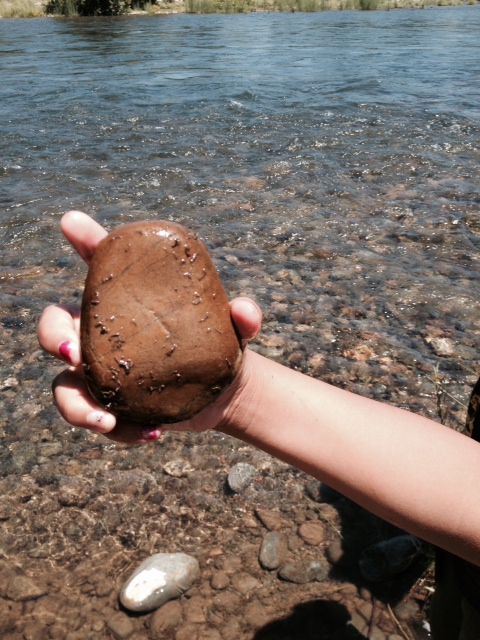
FCUSD Summer Learning Program students looking for Macro Invertebrates.


FCUSD finding and identifying planarian and river snails.


For more information on this activity please contact Mark Drewes at mdrewes@scoe.net


STEM / Expanded Learning Program and Other Pertinent Education Articles

1) How To Raise Brilliant Children, According to Science 
    (Anya Kamenetz, NPR, July 5, 2016)

2) Study says reading aloud to children, more than talking, builds literacy
    (Susan Frey, Ed Source, July 8, 2015)

3) Preparing Teachers for Next Generation Science Standards
    (Lauren Madden, Education Week, July  5, 2016)

4) More Playtime! How Kids Succeed with Recess Four Times a Day at School
    (Christopher Connelly, KQED, January 4, 2016)

5) 5 Benefits of Outdoor Education (Michael Becker, Edutopia, April 19, 2016)

6) At Google, women and minorities still lag
    (Jessica Guynn USA Today, June 30, 2016)

7) Making the Case: Investing in Informal STEM Education 
    (National After School Association, May 17, 2016)

8) Let'em Out! The Many Benefits of Outdoor Play in Kindergarten
    (Holly Korbey, July 23, 2014, KQED) 

9) California After School Network Releases State of Expanded 
    Learning 2015-2016 (CAN)

10) Impact on SES Changes on Expanded Learning Programs
      (Partnership for Children and Youth)

11) The Coming Together of School and Afterschool Practices
      (Sam Piha, Temescal and Associates, Blog, July 1, 2016)

12) What English Language Learners Wish Their Teachers Knew
      (Wendi Pillars, Education Week, June 22, 2016)

13) English Teachers' Hip Hop Curriculum Gets Students Writing
      (Elisha McNeil, Education Week, June 20, 2016)

14) The Economic Impact of Early Exposure to STEM Education
      (Committee for Economic Development, June 21, 2016)


STEM (and other interdisciplinary core content) Activities / Videos / Websites

1) Are young kids losing the brain-boosting benefits of playtime? 
    (PBS News Hour, Video, July 5, 2016)

2) Why Making Mistakes Is What Makes Us Human
    (KQED, Video, September 2, 2015)

3) How Stories Told of Brilliant Scientists Affect Kids' Interest In The Field
    (NPR, Podcast, June 7, 2016)

4) PBS Teacher Built Learning Activities (PBS Resources / Activities)

5) Homemade Hi-fidelity Speakers (Middle School / High School Activity)

6) DIY IPhone Speakers (Elementary)

7) 20 Books Featuring Diverse Characters to Inspire Connection and Empathy
   (Book list, KQED)

8) 5 Illustrated Books for Kids Who Dig Math (Book list, Read Brightly)

9) 14 Books That Connect Students WithValuable Scientists' Struggles
    (Book list, KQED)

10) Engineering Career Options (PBS Learning Media, Grades 6-12)

11) Soil Erosion Experiment (Activity, Grades 4-8)

12) What's Your Hypothesis? (PBS, Grades K-2 Lesson Plan)

13) A Collection of Resources for Teaching Social Justice (Resources / Lesson Plans)


STEM / Educational Grants

1) The Big List of Educational Grants and Resources
   (Edutopia, Updated on July 3, 2016)

2) Target Field Trip Grants ($700)  (August 1 through September 30, 2016)


STEM / Misc. Professional Development / Contest / Events:

1) CASRC Online Free Professional Development (Free)

2) CalSac E-learning Opportunities (Free)


Thanks again for all that you do in the field. Please keep us posted about STEM events/activities in your area. Please feel free to contact us at any time.

Monica Gonzalez-Williams (SCOE: Region 3: After School Regional Lead):
mgonzalez@scoe.net

Phil Romig (SCOE: Science Curriculum Specialist): promig@scoe.net

Mark Drewes (SCOE: Project Specialist II: After School) mdrewes@scoe.net