Wednesday, July 6, 2016

July is National Park and Recreation Month

This July, discover your super powers at your local parks and rec! When we work together to further health and wellness, conservation and social equity efforts, awesome things happen!
This year, the Park and Rec Brigade is here to help you discover your super powers at your local parks and recreation. Captain Community, the Green Guardian and the Fit Twins will guide you on your adventure during Park and Recreation Month. Click here for more information.
Get outside and explore nature, the benefits are as follows:
Body
  • Outdoor play increases fitness levels and builds active, healthy bodies, an important strategy in helping the one in three American kids who are obese7 get fit. 
  • Spending time outside raises levels of Vitamin D, helping protect children from future bone problems, heart disease, diabetes and other health issues.8
  • Being out there improves distance vision and lowers the chance of nearsightedness.9
Mind
  • Exposure to natural settings may be widely effective in reducing ADHD symptoms.10
  • Schools with environmental education programs score higher on standardized tests in math, reading, writing and listening.11
  • Exposure to environment-based education significantly increases student performance on tests of their critical thinking skills.12
Spirit
  • Children’s stress levels fall within minutes of seeing green spaces.13
  • Play protects children’s emotional development whereas loss of free time and a hurried lifestyle can contribute to anxiety and depression.14
  • Nature makes you nicer, enhancing social interactions, value for community and close relationships.1

Click here for the one page fact sheet in regards to why getting out in nature is important.

Click here for the information on the outdoor contest in which one lucky winner each week will receive a $500 Amazon gift card. (Starting July 11, 2016)

Let's see what STEM learning activities the Summer Learning Program practitioners have been engaging the Region 3 students in.


Name of Out-of-School-Time Provider: Wheatland School District Expanded 
                                                                    Learning Programs

Name of District: Wheatland School District

Type of Program: Summer Learning Program (Summer Camp)

Grade Level of Activity: Fourth Grade

Number of Students Who Took Part in Activity: 44

Type of Activity: Fourth Grade Students took a trip to Bishop's Pumpkin Farm

Description of STEM Activity:

In their summer learning program the students of Wheatland are learning about the different community partners that exist in their area. Tara Arroz, Wheatland's expanded learning program  grant manager, recently reached out and was able to form a new partnership with Bishop's Farm. Bishop's Farm, is a new partner in Wheatland's STEM learning Ecosystem and below is what I observed during my site visit from 10:15 to 1:00 PM.

On the day that I visited Bishop's farm, 50 fourth graders from Wheatland's summer learning 
program were on site. The fourth graders took part in the following learning activities:


  • Provided with a tour of the grounds
  • Learning about the various crops and jobs that the local farm provides to the             community and surrounding areas
  • Learning about the three different soil types (Sand, Clay, and Silt) that exist on the site of the farm, the qualities of each soil type, and the types of produce that can grow and be supported by each soil type
  • Planted strawberries in individual containers that they took home to their families
  • Made salsa from produce grown onsite, followed a recipe
  • Had a lunch which also included local produce grown onsite

The activities that I witnessed were aligned with the 5 LIAS Principles, and were tied to the following Quality Standards (active and engaged learning, skill building, healthy choices and behaviors, diversity, equity, and access, and collaborative partnerships).


Summer Learning Program students learning about the qualities of sand.


Summer Learning Program students from Wheatland learning about the qualities of silt.
For more information on this activity or partnership please contact 
Tara Arroz at taroz@wheatland.k12.ca.us.


Name of Out-of-School-Time Provider: Folsom Cordova Unified School District's 
                                                                    STARS Summer Learning Program


Name of District: Folsom Cordova Unified School District

Name of School Site: White Rock Elementary

Grade Level of Activity: Third through Sixth Grade

Number of Students Who Took Part in Activity: 44

Type of Activity: River Bend Outdoor Education Session

Description of STEM Activity:

The students were engaged in the following three activities:

a) Macro Invertebrates - What are they? What do they look like? What do they mean for a 
riparian habitat? What do they tell us about a water source?

b) A Nature hike around Mile marker 14 and 15 of the American River Parkway - What 
are the native and invasive plant species of this riparian habitat? How were these plant species 
used by native Americans? The importance of these plant species to this riparian habitat.

c) River Crossing Challenge- In this engineering design challenge activity students are asked to imagine that they are a part of an 1847 wagon party and that they need to get their raft across 
the river using only natural resources in the area. 

These activities are aligned with the 5 LIAS principles and the following Quality Standards 
(Active and Engaged Learning, Diversity, access and equity, collaborative partnerships, skill 
building, and Youth Voice and Leadership)


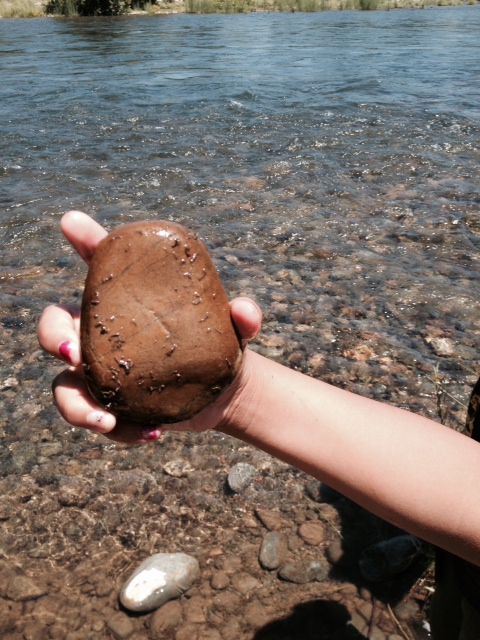
FCUSD Summer Learning Program students looking for Macro Invertebrates.


FCUSD finding and identifying planarian and river snails.


For more information on this activity please contact Mark Drewes at mdrewes@scoe.net


STEM / Expanded Learning Program and Other Pertinent Education Articles

1) How To Raise Brilliant Children, According to Science 
    (Anya Kamenetz, NPR, July 5, 2016)

2) Study says reading aloud to children, more than talking, builds literacy
    (Susan Frey, Ed Source, July 8, 2015)

3) Preparing Teachers for Next Generation Science Standards
    (Lauren Madden, Education Week, July  5, 2016)

4) More Playtime! How Kids Succeed with Recess Four Times a Day at School
    (Christopher Connelly, KQED, January 4, 2016)

5) 5 Benefits of Outdoor Education (Michael Becker, Edutopia, April 19, 2016)

6) At Google, women and minorities still lag
    (Jessica Guynn USA Today, June 30, 2016)

7) Making the Case: Investing in Informal STEM Education 
    (National After School Association, May 17, 2016)

8) Let'em Out! The Many Benefits of Outdoor Play in Kindergarten
    (Holly Korbey, July 23, 2014, KQED) 

9) California After School Network Releases State of Expanded 
    Learning 2015-2016 (CAN)

10) Impact on SES Changes on Expanded Learning Programs
      (Partnership for Children and Youth)

11) The Coming Together of School and Afterschool Practices
      (Sam Piha, Temescal and Associates, Blog, July 1, 2016)

12) What English Language Learners Wish Their Teachers Knew
      (Wendi Pillars, Education Week, June 22, 2016)

13) English Teachers' Hip Hop Curriculum Gets Students Writing
      (Elisha McNeil, Education Week, June 20, 2016)

14) The Economic Impact of Early Exposure to STEM Education
      (Committee for Economic Development, June 21, 2016)


STEM (and other interdisciplinary core content) Activities / Videos / Websites

1) Are young kids losing the brain-boosting benefits of playtime? 
    (PBS News Hour, Video, July 5, 2016)

2) Why Making Mistakes Is What Makes Us Human
    (KQED, Video, September 2, 2015)

3) How Stories Told of Brilliant Scientists Affect Kids' Interest In The Field
    (NPR, Podcast, June 7, 2016)

4) PBS Teacher Built Learning Activities (PBS Resources / Activities)

5) Homemade Hi-fidelity Speakers (Middle School / High School Activity)

6) DIY IPhone Speakers (Elementary)

7) 20 Books Featuring Diverse Characters to Inspire Connection and Empathy
   (Book list, KQED)

8) 5 Illustrated Books for Kids Who Dig Math (Book list, Read Brightly)

9) 14 Books That Connect Students WithValuable Scientists' Struggles
    (Book list, KQED)

10) Engineering Career Options (PBS Learning Media, Grades 6-12)

11) Soil Erosion Experiment (Activity, Grades 4-8)

12) What's Your Hypothesis? (PBS, Grades K-2 Lesson Plan)

13) A Collection of Resources for Teaching Social Justice (Resources / Lesson Plans)


STEM / Educational Grants

1) The Big List of Educational Grants and Resources
   (Edutopia, Updated on July 3, 2016)

2) Target Field Trip Grants ($700)  (August 1 through September 30, 2016)


STEM / Misc. Professional Development / Contest / Events:

1) CASRC Online Free Professional Development (Free)

2) CalSac E-learning Opportunities (Free)


Thanks again for all that you do in the field. Please keep us posted about STEM events/activities in your area. Please feel free to contact us at any time.

Monica Gonzalez-Williams (SCOE: Region 3: After School Regional Lead):
mgonzalez@scoe.net

Phil Romig (SCOE: Science Curriculum Specialist): promig@scoe.net

Mark Drewes (SCOE: Project Specialist II: After School) mdrewes@scoe.net

Tuesday, May 17, 2016

Region 3 STEM Blog takes a look at the "First Lady of Physics"


May is Asian Pacific American Heritage month and so to celebrate this month let's learn about the "First Lady of Physics". Chien-Shiung Wu was a Chinese American experimental physicist who made significant contributions in the field of nuclear physics. Wu worked on developing the process for separating uranium metal into uranium-235 and uranium-238 isotopes. Her expertise in experimental physics evoked comparisons to Marie Curie. Her nicknames include "the First Lady of Physics", "the Chinese Madame Curie", and the "Queen of Nuclear Research". 

Let's see what STEM activities the Expanded Learning Program practitioners have been engaging the Region 3 students in.

Name of Out-of-School-Time Provider: San Juan Unified Bridges After School 
Program

Name of District: San Juan Unified School District

Name of School Site: Encina High School

Grade Level of Activity: 9th Grade

Number of Students Who Took Part in The Activity: 20 students

Type of Activity: Robotics Club

Description of STEM Activity: 

The video at the link below was created by a group of  students in the Encina ASSETs program using footage taken from a Quadcopter they assembled and fitted with a camera. The five students are part of a Robotics/Engineering club in the ASSETs program and have been working on the Quadcopter project in the after-school program since early in the school year. The students had to solve issues with the weight and placement of the camera before they were finally able to achieve successful flight and ultimately capture video of their school, and the Color Run they partnered with the Associated Student Body (ASB) to host.

Click here to see video that the Quadcopter took. 

For more information on this project please contact San Juan Unified School District's Expanded Learning Program Grant Manager Debbie Middleton at DMiddleton@sanjuan.edu.


Name of Out-of-School-Time Provider: San Juan Unified's Bridges After School 
Program

Name of District: San Juan Unified School District

Name of School Site: Starr King K-8

Grade Level of Activity: 6th through 8th Grade

Number of Students Who Took Part in The Activity: 20 students

Type of Activity: Cow Eye Dissection

Description of STEM Activity: 

The Bridges After-School Program at Starr King K-8  scheduled an expert from the Ann Arbor Hands-On Museum of Michigan to lead an exciting learning opportunity for Bridges students. Corrina Strecker, Distance Learning Manager for the museum, walked the group through a cow eye dissection via live video streaming. The museum shipped the cow eyes to the Bridges program in preparation for the conference. The students learned the anatomy of a cows eye and the function of each part as  they removed and examined it.  Each participant had the opportunity to share their observations and ask questions of the museum expert during this engaging learning experience.


Bridges Expanded Learning Program students working on a cow eye dissection.
Bridges Expanded Learning Program student is proudly displaying his cow eye.

Bridges Expanded Learning Program students learning how to properly dissect a cow's eye.

For more information on this project please contact San Juan Unified School District's Expanded Learning Program Grant Manager Debbie Middleton at DMiddleton@sanjuan.edu.


STEM / Expanded Learning Program and Other Pertinent Education Articles:

1) Protect California's Quality After School Programs: AB2663
    (Save Afterschool website)

2) Messaging Documents to Protect CA's Quality After School Programs
    (Save Afterschool website)

3) Politics and Afterschool: 4 Tips That Could Help you this Election Season
    (National Afterschool Association Website)

4) May is National Physical Fitness and Sports Month
     (National Afterschool Association Website)

5) Arts and Afterschool: A Powerful Alliance
    (National Afterschool Association Website)

6) Thinking About Science + Nature: An Art Teacher's Approach
    (Kimberley Campisano, April 11, 2016, KQED)

7) Zoo Crew empowers youth to tackle conservation
    (Erin Murphy, April 8, 2016, After School Alliance Blog)

8) The Power of Art to Build Strong Youth and Heal Trauma
   (Alex M. Johnson, April 11, 2016, Huffington Post)

9) Why Kids Should Use Their Fingers in Math Class
    (Jo Boaler and Lang Chen, April 13, 2016, The Atlantic)

10) Some after school program providers say flat funding may cause them to close
      (Susan Frey, April 6, 2016, Ed Source)

11) Can Songs Help You Learn Scientific Concepts?
      (Tania Lombrozo, May 2, 2016, NPR)

12) The problem with teaching "grit" to poor kids? They already have it. Here is what 
      they really need.  (Valerie Strauss, May 10, 2016, The Washington Post)

13) Understanding Gender Identity in Young People: A Briefing Paper for 
      After School Programs
      (Sam Phia and Samantha Waters, April 28, 2016, Temescal and Associates)

14) A Vision for Expanded Learning in California (Strategic Plan Update April 2016)


STEM (and other interdisciplinary core content) Activities / Videos / Websites:

1) Want to Teach In Urban Schools? Get to Know the Neighborhood
    (April 10, 2016, NPR) (Podcast)

2) Survey Raises Concern about Non-English Speaking Students
    (Claudio Sanchez, May 13, 2016, NPR) (Podcast)

3) Feds turn to Hip Hop to Tamp Down Teen Smoking
    (Maanvi Singh, May 10, 2016, NPR) (Podcast)

4) Preparing Youth To Thrive (Promising Practices in Social Emotional Learning)
    (SEL Practices Website) (Resource Guide)

5) STEM Gems (Experiential STEM Learning Activities)
    (STEM Activities from National After School Association) 

6) After School Tech Trends 2016 ( National After School Association website)

7) Four Free Tools for Arts Integration in the Content Classroom
    (Graphite Blog, January 26, 2016)

8) New App helps families find summer meal sites (App)

9) What Killed the Dinosaurs? (Activity #2 PBS) (Grades K-2)

10) Arts Edge (Integrated Art Activities)


STEM / Educational Grants:

1) Math Moves U: Math Hero Award (Math hero receives a $2,500 grant and school 
    receives a matching award) (Deadline: Applications open Spring of 2016)

    17 Resources for Future Proof Kids
    (Deadline: Varies by Grant Opportunity) 


4) The Big List of Educational Grants and Resources (Edutopia List of Grants)
    (This webpage has been updated on May 7, 2016)

5) Target Field Trip Grants ($700)  (August 1 through September 30, 2016)

6) Project WET Funding Database (Scroll down to the bottom of the page 
    and click on the "Grants" link)


STEM / Misc. Professional Development / Contest / Events:

1) CA STEM Symposium 2016 (October 9-11, 2016: Fee: $310 per participant 
     before September 1, 2016)

2) Lights on After School Poster Contest (Deadline: June 1, 2016)

3) Sustainable Cities (CA Lead Module) (Cost: Free) (June 2, 2016)

4) Let's Put The A(rt) in STEM (Cost: Free) (Date: June 9, 2016)


Thanks again for all that you do in the field. Please keep us posted about STEM events/activities in your area. Please feel free to contact us at any time.

Monica Gonzalez-Williams (SCOE: Region 3: After School Regional Lead):
mgonzalez@scoe.net

Phil Romig (SCOE: Science Curriculum Specialist): promig@scoe.net

Mark Drewes (SCOE: Project Specialist II: After School) mdrewes@scoe.net


Tuesday, April 12, 2016

Let's Put the A(rt) in STEM

Hello Region 3 Expanded Learning Program practitioners, we hope this blog finds you doing well. April is National Poetry Month and with that we wanted to share the following poem with you and your students:

Thinking Like a Scientist
by Jennie Munson

I want to think like a scientist
Observing animals, earth, or sky.
I want to ask good questions
Wondering how, what, and why.

I want to make smart guesses
Hypothesizing what might happen and when.
I want to do cool experiments
Testing my thinking again and again.

I want to write up all my data,
Recording pictures, charts, or words.
I want to think through all I've done
Drawing conclusions about what I've learned.

Wondering, asking, testing, concluding.
This is what scientist do.
If you want to think like a scientist
Then you must do them too!

Now lets take a closer look at and see how Expanded learning Program Practitioners and their students in expanded learning program and have been engaged in STEM activities during the month of March.


Name of Expanded Learning Program Provider: Sacramento Chinese Community 
Service Center

Name of District: Twin Rivers Unified School District

Name of School Site: Foothill Oaks Elementary

Grade Level of Activity: 5th Grade though 8th grade

Number of Students Who Took Part in The Activity: 20 students

Type of Activity: NBA Math Hoops

Learning Objectives of NBA Math Hoops:

NBA Math Hoops is a fast-paced basketball board game and mobile app that allows students to learn fundamental math skills through direct engagement with the real statistics of their favorite NBA and WNBA players. The NBA Math Hoops curriculum is tied to Common Core State Standards and 21st Century Learning Skills, and it has been shown to improve students’ basic math skills and understanding of statistics, in addition to their interpersonal skills, driving them to collaborate more effectively with their peers.


Foothill Oaks expanded learning program students compete in the first ever NBA Math Hoops Competition.

For more information on this pilot of NBA Math Hoops please contact Site Coordinator Sarah Heidel at sarah@sccsc.org


Name of Out-of-School-Time Provider: Target Excellence

Name of District: Elk Grove Unified

Name of School Site: Roy Herburger Elementary

Grade Level of Activity: 4th through 6th

Number of Students Who Took Part in The Activity: 20 students

Type of Activity: Sacramento Science Olympiad

Learning Objectives of Science Olympiad:

The STEM activities lend themselves to all STEM disciplines and expose 
students to practicing scientists, career choices, and energizes classroom
teachers with dynamic content experience.

Roy Herburger Expanded Learning students competing in the Science Olympiad.

Roy Herburger Expanded Learning students working on their tennis ball catapult.

Roy Herburger Expanded Learning students receiving their 4th place medals for the Calculator and Don't Bug Me Contest.


For more information on the Sacramento Science Olympiad please contact Site Coordinator Jenna Boydl at jenna.boyd@targetexcellence.org.


Name of Out-of-School-Time Provider: Sacramento Chinese Community Service Center

Name of District: Sacramento City Unified School District

Name of School Site: Nicholas Elementary

Grade Level of Activity: 5th Grade though 6th grade

Number of Students Who Took Part in The Activity: 20 students

Type of Activity: Flight and Rocketry

Learning Objectives of Flight and Rocketry:


a) Learn that scientist investigate by making observations and performing tests

b) Deepen their understanding of air resistance


c) Explore and understand that skinny streamlined shapes can move                                      
     faster because they have less air resistance


d) Understand that air resistance is an important factor in designing rockets                                
     fast takeoffs and soft landings

Nicholas Expanded Learning students testing out their ballon and straw rockets.


Nicholas Expanded Learning students testing their ballon and straw rocket design.

Nicholas Expanded Learning students planning the design of their paper rocket.

Nicholas Expanded Learning students plan for creating their paper rocket.
For any questions on this activity please contact Mark Drewes at mdrewes@scoe.net. This was an activity facilitated by CSUS School of Education students. 


STEM / Expanded Learning Program and Other Pertinent Educational Articles:

1) After-school programs need funds to help students thrive: Guest Commentary
    (Steve Zimmer and Eric Gurna, LA Dail News, March 11, 2016)

2) 8 Family Strategies to Boost Program Engagement
    (Daniel W. Hatcher, BOOST Blog, March 17, 2016)

3) Book club helps immigrant mothers find joy in reading and support their kids' 
    education (Daniela Gerson, LA Times, March 5, 2016)

4) Shadow a student challenge helps administrators understand kids
    (Theresa Harrington, EdSource, March 7, 2016)

5) A principal met a student she expelled, and it changed her approach to discipline
    (Emma Brown, Washington Post, March 8, 2016)

6) 10 Motivators to Promote Playful Learning
    (Laura Robb, Middleweb, March 6, 2016)

7) ESSA: A Q and A for the after school field
    (Jillian Luchner, Afterschool Alliance, March 3, 2016)

8) Brains in Pain Cannot Learn! (Dr. Lori Desautels, Edutopia, January 7, 2016)

9) The Superior Social Skills of Bilinguals
    (Katherine Kindler, New York Times, March 11, 2016)

10) Four Reasons to Start Class With a Poem Each Day
    (Brett Vogelsinger, Edutopia, March 11, 2016)

11) Why Kids Need to Move, Touch, and Experience to Learn
    (Katrina Schwartz, Mind/Shift, March 26, 2015)

12) What Kind of Group Work Encourages the Most Original Thinking? 
      Elissa Nadworny, Mind/Shift, March 14, 2016)

13) Equity is Fostered Through What We Teach and What We Don't
      (Elena Aguilar, Edutopia, April 7, 2016)

14) Full STEM Ahead: At Franklin Institute, students learn science is a diverse field
      (Kristin E. Holmes, April 5, 2016)

15) Why Do Some Poor Kids Thrive? (Alana Semuels, The Atlantic, April 6, 2016)

16) Looking for the Hidden Genius Within Disenfranchised Youth
      (Mindshift, March 3, 2014)

17) How to get kids hooked on books? Use Poetry.
      (NPR, April 3, 2016)


STEM (and other interdisciplinary core content) Activities / Videos / Websites:

1) The World of Expanded Learning Interview with Jeff Davis 
    (Executive Director of CAN) (Bruno Marchesi, VLOG, March 7, 2016)

2) The World of Expanded Learning Interview with Brigette Edwards 
    (Site Coordinator) (Bruno Marchesi, VLOG, March 2, 2016)

3) Ode to A Site Coordinator by Diego Aranciba
    (Video, March 31, 2016)

4) The World of Expanded Learning: Resources that I wish that I had known about
    (Bruno Marchesi, VLOG, February 19, 2016)

5) STEAM Lesson: Coloring Sound (Lesson for Grades 6-8)

6) New App helps undocumented immigrants find college scholarships
    (App for high school students)

7) Meet the "Rocket Girls," the women who charted the course to space
    (NPR, April 5, 2016, Podcast)

8) The Poetry of Sylvia Plath / Crash Course Literature #216
    (PBS Learning Media, Media Resource for MS / HS students)

9) The Difference Between Empathy and Sympathy Explained Perfectly 
    With a Simple Animation  (Vimeo, Video Resource)

10) Summer Opportunities Resources
      (National Summer Learning Association, Resource Guides)

11) Discovering Poetry
     (PBS Learning Media Document for Grades PreK to 4th)

12) 5 Fun and Easy Science Projects To Do At Home
      (Exploratorium, Activities Grades 5-8)

13) Resources and Downloads to Support College Readiness
      (Edutopia, Resources) 

14) California After School Resource Center (Online STEM trainings)


15) Drew Dudley Leading With Lollipops (Leadership Tedx Talk, 2010)

16) The Future Project: NY High School Students Share Their View on School
      (The Future Project Video)

17) Science Poems (Poems on Various Science Concepts)


STEM / Educational Grants:

1) National Council of Teachers of Mathematics (NCTM): Enhancing Student 
    Mathematics Learning Through the Use of Tools and Technology  
    ($3,000 grants are available)
    (Deadline: May 6, 2016)

2) Math Moves U: Math Hero Award (Math hero receives a $2,500 grant and school 
    receives a matching award) (Deadline: Applications open Spring of 2016)

3) Best Satellite Providers: Technology Grants for Educators 
    17 Resources for Future Proof Kids
    (Deadline: Varies by Grant Opportunity)


    (This webpage has been updated on April 3, 2016)

6) Target Field Trips Grant ($700)  (August 1 through September 30, 2016)

   (Scroll down to the bottom of the page and click on the 
    "Grants" link)


STEM / Misc. Professional Development / Contest / Events:

1)  CA STEM Symposium 2016 (October 9-11, 2016: Fee: $285 per participant 
     before April 30, 2016)

2) Lights On After School Poster Contest (Deadline: June 1, 2016)
3) SCOE STEM Module Training (Module TBD) (Cost: Free) (June 2, 2016)
    More information coming in the next few weeks: 
    Click here to take part in the survey to help determine the STEM Module

4) Let's Put the A(rt) in STEM workshop at the Crocker Art Museum
    (Cost: Free) (Date: June 9, 2016) (Registration Opening Soon)


Thanks again for all that you do in the field. Please keep us posted about STEM events/activities in your area. Please feel free to contact us at any time.

Monica Gonzalez-Williams (SCOE: Region 3: After School Regional Lead):
mgonzalez@scoe.net

Phil Romig (SCOE: Science Curriculum Specialist): promig@scoe.net

Mark Drewes (SCOE: Project Specialist II: After School) mdrewes@scoe.net